How to Style a Formal Gown: Tips for Every Body Type
Introduction
There is something undeniably transformative about wearing a formal gown. The moment you slip into the right one, something shifts. You stand a little taller, move a little more deliberately, and carry yourself with a sense of occasion that everyday clothing rarely inspires. A truly great formal gown does not just make you look beautiful. It makes you feel powerful, elegant, and completely like yourself on what is often one of the most memorable nights of the year.
The challenge, of course, is finding that gown. With so many silhouettes, fabrics, colors, and styling options available, the process of choosing and styling a formal gown can feel overwhelming rather than exciting. Add body type considerations into the mix, and it is easy to see why so many women find formal dressing more stressful than celebratory.
This step-by-step guide is here to change that. Whether you are attending a black-tie gala, a formal wedding, a charity ball, or a prom, these steps will walk you through everything you need to know to find, choose, and style a formal gown that makes you feel extraordinary from the moment you put it on.
Step 1: Understand Your Body Shape Before You Shop
Before you begin looking at gowns, take a few minutes to honestly assess your body shape and proportions. This is not an exercise in finding flaws. It is an exercise in understanding your body so that you can dress it with intelligence and intention rather than guessing in a fitting room.
The five main body shapes, hourglass, pear, apple, rectangle, and inverted triangle, each have proportional characteristics that respond differently to various gown silhouettes. An A-line gown that is universally flattering for a pear shape may not offer the same result for an inverted triangle figure. A fitted mermaid silhouette that looks stunning on an hourglass shape may feel uncomfortable and unflattering on an apple figure.
Take your measurements, including your bust, waist, and hip circumference, and note where your body is widest and where it is narrowest. Observe whether your shoulders and hips are roughly equal in width, whether your waist is clearly defined or more straight, and where you carry the most volume. Armed with this information, you will be able to assess gown silhouettes with a clear, practical eye rather than simply reacting emotionally to how things look on a hanger or on a model with entirely different proportions.
Step 2: Choose the Right Silhouette for Your Body Shape
The silhouette of a gown is its most defining characteristic and the single most important factor in how flattering it will be on your specific body. Understanding which silhouettes work best for each body type is the foundation of successful formal gown styling.
For hourglass figures, almost any silhouette works beautifully because the naturally balanced proportions of equal shoulders and hips with a defined waist are what most gown silhouettes are designed around. Fitted mermaid gowns, sheath dresses, fit-and-flare styles, and ball gowns all showcase the hourglass figure magnificently. The key is to choose a gown that follows and celebrates your curves rather than obscuring them with excessive volume or structure.
For pear-shaped figures, the goal is to draw attention upward toward the shoulders and bust while choosing a skirt silhouette that skims gracefully over the hips and thighs. A-line gowns are among the most universally flattering choices for pear shapes because they fit closely through the bodice and then flare gently from the waist, creating an elegant line that flows over rather than clings to the lower body. Ball gowns are equally excellent because the fullness of the skirt creates a beautiful balance with a narrower upper body. Look for bodice details like embellishment, off-the-shoulder sleeves, or interesting necklines that draw the eye upward.
For apple-shaped figures, the priority is to create the appearance of a waistline while drawing attention away from the midsection and toward the bust, legs, and décolletage. Empire waist gowns, which have a seam just below the bust that allows the skirt to flow loosely from the narrowest part of the torso, are extraordinarily flattering for apple shapes. Wrap-style gowns and V-neckline silhouettes create a beautiful vertical line that elongates the torso. A-line skirts are also an excellent choice as they do not cling to the midsection but instead fall away cleanly from the natural waist.
For rectangle or straight figures, the goal is to create the illusion of curves and definition. Fit-and-flare gowns, mermaid silhouettes, and ball gowns with full skirts all add volume and dimension at the hips and create a curvier overall silhouette. Look for gowns with ruching, draping, or embellishment at the waist that creates the visual impression of a defined midsection. Peplum details at the hip are also an excellent choice for adding curve to a straighter figure.
For inverted triangle figures, where the shoulders are noticeably broader than the hips, the priority is to add visual volume to the lower half while keeping the upper half relatively clean and uncluttered. A-line and ball gown silhouettes are ideal because they add fullness to the skirt and create a balanced proportional relationship between broader shoulders and a fuller skirt. Choose simple, clean necklines and avoid off-the-shoulder or heavily embellished shoulder details that draw attention to the widest part of the body.
Step 3: Select the Most Flattering Neckline
Once you have identified your ideal silhouette, the next step is to choose a neckline that flatters your face shape, your bust, and your overall proportions. The neckline of a formal gown frames the face and draws the eye to the décolletage, making it one of the most visible and impactful design details of the entire garment.
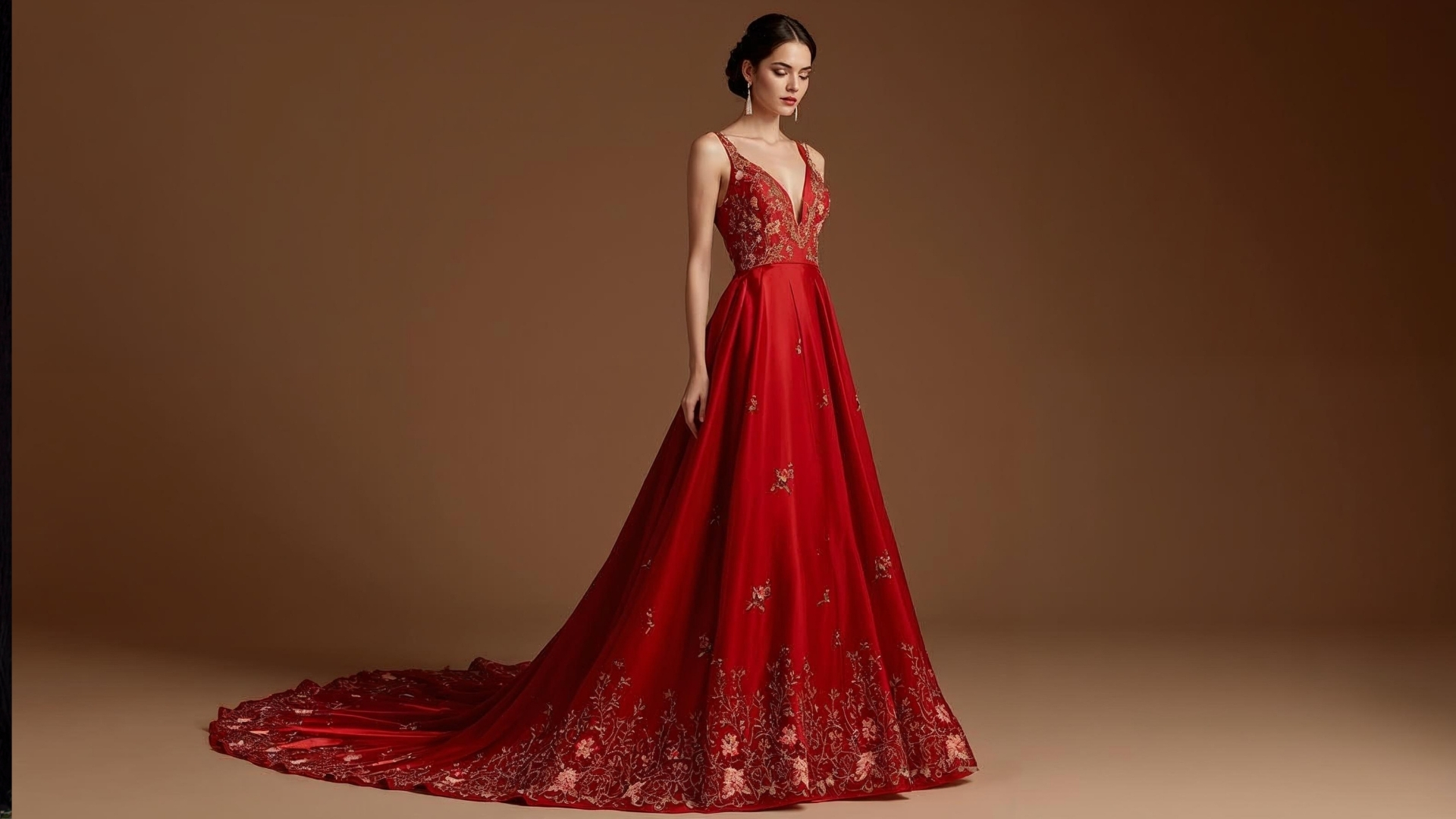
A V-neckline is one of the most universally flattering neckline options available. It creates a long, vertical line that elongates the neck and torso, draws the eye downward, and is particularly beautiful on fuller busts, apple shapes, and hourglass figures. A deep V-neckline adds drama and sensuality to a formal look, while a more moderate V creates elegance without excess.
A sweetheart neckline is a curved, heart-shaped neckline that frames the bust beautifully and works extremely well on hourglass and pear figures. It adds a romantic, feminine quality to a formal gown and creates a defined, beautiful frame for the décolletage. It is particularly flattering on those with a smaller bust as it visually adds volume and shape.
An off-the-shoulder or bardot neckline draws attention beautifully to the collarbone and shoulders and is most flattering on those with narrow to medium shoulder width. For inverted triangle figures, this neckline can emphasize already broad shoulders and is therefore best avoided. For pear shapes and hourglass figures, it is a stunning choice that highlights one of the most elegant features of the upper body.
A high or illusion neckline adds drama and sophistication to a formal gown and works beautifully for rectangle and inverted triangle figures as it does not add any additional width to the upper body. High necklines are particularly well-suited to formal events with a conservative dress code where more coverage is appropriate or desired.
A halter neckline is excellent for hourglass and pear figures as it creates a strong visual line at the shoulders and draws attention upward toward the face and neckline. It works best for those with a moderate to smaller bust and creates a long, elegant vertical line from the neck to the waist.
Step 4: Choose the Right Fabric for Your Look and Comfort
The fabric of a formal gown significantly affects not just how it looks but how it moves, how it feels to wear for an entire evening, and how well it holds its shape and silhouette throughout the event. Choosing the right fabric is therefore as much a practical decision as an aesthetic one.
Satin is one of the most popular and enduring formal gown fabrics for good reason. It has a luminous, smooth surface that photographs beautifully, drapes elegantly on the body, and creates strong, clean silhouettes. It works particularly well for mermaid, sheath, and A-line gowns. Keep in mind that satin is an unforgiving fabric that shows every line and bump, so fit and undergarments are especially important when wearing a satin gown.
Chiffon is a lightweight, sheer, and beautifully fluid fabric that creates a soft, romantic aesthetic. It is an excellent choice for A-line and empire waist silhouettes as it flows and moves gracefully with the body. Chiffon is also one of the most forgiving fabrics for various body types because its fluid nature does not cling to the body in the way that satin or jersey might. It is particularly well-suited to warm-weather formal events because of its lightness and breathability.
Tulle is the fabric of ball gowns and fairy tale silhouettes. It is structured enough to create dramatic volume and hold its shape, while being light enough not to add excessive weight to the skirt. Tulle ball gowns are among the most visually stunning formal options available and are ideal for pear and inverted triangle figures seeking to add visual volume to the lower half.
Lace adds an intricate, romantic quality to a formal gown that is unlike any other fabric. It works beautifully on all body types and is particularly appropriate for formal weddings and black-tie events with a classic, elegant dress code. Lace overlays on a satin or chiffon base create a luxurious layered effect that photographs extraordinarily well and feels genuinely special to wear.
Velvet is a rich, opulent fabric that is particularly beautiful for autumn and winter formal events. It has a depth and texture that photographs magnificently in low light and creates a sense of warmth and luxury that lighter fabrics cannot replicate. Velvet works best in fitted or semi-fitted silhouettes that showcase the beauty of the fabric without adding unnecessary bulk.
Step 5: Select a Color That Works for You
Choosing the right color for a formal gown is a deeply personal decision, but understanding a few key principles can help you make a choice that flatters your skin tone and creates the visual impact you are hoping for.
Your skin’s undertone is the most useful guide for choosing a flattering gown color. Warm undertones, which appear golden, peachy, or olive, are most beautifully complemented by warm gown colors like gold, copper, champagne, warm red, coral, burnt orange, and rich jewel tones like emerald and deep teal. Cool undertones, which appear pink, red, or bluish, are most flattered by cool gown colors like icy blue, lavender, cool pink, silver, deep plum, and classic navy. Neutral undertones have the most flexibility and can wear virtually any color beautifully, guided primarily by personal preference and the mood they want to create.
Beyond undertones, consider the impression you want to make. A classic black gown communicates timeless elegance and sophistication and is appropriate for virtually every formal occasion. A rich jewel tone like sapphire, emerald, or deep ruby makes a confident, memorable statement. A soft blush or champagne creates a romantic, ethereal effect. A bold, bright color like electric blue, fuchsia, or vibrant red turns the wearer into the most memorable person in the room.
Do not be afraid of color simply because it feels daunting. A formal gown is one of the most appropriate contexts in the world for a bold color choice, and wearing something in a color you love with genuine confidence will almost always produce a more beautiful result than wearing a safer color you feel merely adequate in.
Step 6: Get the Fit Right With Alterations
No matter how beautiful a gown is or how perfectly its silhouette suits your body type, it will not achieve its full potential if it does not fit correctly. Formal gowns are almost never perfect off the rack, and alterations are not a last resort but an expected and essential part of the formal dressing process.
Identify the area of the gown that is most challenging to fit first. For pear shapes, this is usually the hips, hourglass figures, and it is often the waist. apple shapes, it is typically the midsection. For rectangle figures, it is sometimes the bust. Buy the gown to fit your largest measurement and have everything else adjusted by a skilled tailor or seamstress to achieve a perfect, custom fit throughout.
Common and straightforward alterations for formal gowns include taking in or letting out the side seams, adjusting the bust, shortening or lengthening the hem, adding or removing structure from the bodice, and adjusting straps or sleeves. More complex alterations like restructuring a neckline or reshaping a silhouette are possible but require a highly skilled and experienced seamstress.
Allow sufficient time for alterations before your event. Formal gown alterations typically require at least two to four weeks to complete properly, and rushing the process risks errors that can damage the gown. Schedule your first fitting well in advance of the event and plan for at least two fitting appointments to ensure the final result is exactly right.
Step 7: Choose the Right Undergarments
The undergarments you wear beneath a formal gown are invisible to the outside world but their impact on how the gown looks and how comfortable you feel in it is enormous. The right undergarments create a smooth, supported foundation that allows the gown to sit and move as it was designed to.
The specific undergarments you need will depend entirely on the silhouette and fabric of your gown. A fitted satin gown may require seamless shapewear that smooths the silhouette without creating visible lines. A strapless or off-the-shoulder gown requires a strapless bra or a built-in corset for support. A backless gown may need adhesive bra cups or a low-back converter bra. An empire waist or high-waisted silhouette in a flowing fabric may need very little undergarment support at all.
Always bring your chosen undergarments to your fittings so that the tailor can make adjustments with an accurate picture of how the gown will actually sit on your body during the event. A gown fitted without the correct undergarments will almost certainly need additional adjustments when the undergarments are added, wasting both time and money.
Invest in quality undergarments specifically chosen for formal occasions. Cheap or poorly fitting undergarments can undo all the work of a beautifully chosen and expertly fitted gown, while the right ones will make everything look more polished, feel more comfortable, and allow you to enjoy your evening without constant adjustment.
Step 8: Select Your Shoes With Intention
The shoes you choose to wear with a formal gown are not an afterthought. They affect the overall proportion of your look, the length of your hem, and how comfortable and confident you feel throughout what is often a long and active evening.
Heeled sandals are the most popular and versatile choice for formal gown dressing. A strappy heeled sandal in a neutral metallic tone like gold or silver works with virtually any gown color and adds elegance and elongation to the overall silhouette. Choose a heel height that you can genuinely wear comfortably for several hours without pain, as discomfort will affect both your posture and your enjoyment of the evening.
Classic pumps or court shoes in a neutral tone create a sleek, polished look that works beautifully with fitted and mermaid silhouettes. A pointed-toe pump elongates the leg beautifully and creates a clean, uninterrupted line from the hem of the gown to the floor.
Block-heeled sandals or kitten heels are excellent choices for those who prefer a lower heel or find stilettos uncomfortable. They provide stability and comfort without sacrificing elegance, and many designs are genuinely beautiful enough to complement even the most formal gown.
Flat sandals are an entirely appropriate choice for outdoor formal events, beach weddings, or any occasion where navigating the venue in heels would be impractical or uncomfortable. A beautifully designed flat sandal in gold, silver, or a rich jewel tone can look just as stunning beneath a formal gown as a heeled alternative.
If your gown has a full, floor-length skirt, your shoes will barely be visible throughout the evening, which means comfort should take priority over any other consideration. Save your most beautiful but least comfortable heels for gowns with a slit or a shorter hem where the footwear is clearly on display.
Step 9: Accessorize With Intention
Formal gown dressing requires a particularly thoughtful approach to accessories because the gown itself is already making a significant visual statement. The goal of accessories in a formal context is to enhance and complete the look without competing with or overpowering the gown.
Jewelry should be chosen in proportion to the neckline and embellishment of the gown. A heavily embellished or beaded gown needs very little additional jewelry, perhaps just simple stud earrings or a thin bracelet. A simple, minimal gown provides a beautiful canvas for a statement necklace, dramatic earrings, or an elegant cuff. The most reliable rule is to choose one hero jewelry piece and keep everything else minimal in support.
A formal clutch or evening bag is an essential accessory for any formal occasion and should be chosen to complement rather than match the gown exactly. A metallic clutch in gold or silver works with almost any gown color. A satin or beaded clutch in a complementary color adds a beautiful coordinated element. Keep the bag small and genuinely only carry what you need for the evening.
A wrap, stole, or shawl is a practical and elegant accessory for formal events held in air-conditioned venues or cooler outdoor settings. Choose one in a complementary fabric, such as a silk or cashmere stole, that maintains the elegance of the overall look while providing genuine warmth.
Hair accessories like decorative pins, combs, tiaras, or jeweled clips can add an extraordinary finishing touch to a formal look, particularly when the hair is worn up. Choose something that complements your jewelry without duplicating it, and ensure it is secured properly enough to last through a full evening of dancing and socializing.
Step 10: Style Your Hair and Makeup to Complete the Look
A formal gown is a complete look that extends from the tips of your toes to the top of your head, and the way you style your hair and makeup is the final and crucial element that brings everything together.
For hair, the most important consideration is proportion. An updo or a sleek pulled-back style elongates the neck and showcases the neckline and jewelry of the gown beautifully. This is particularly effective with off-the-shoulder, halter, or strapless necklines where the neck and shoulders are on display. Loose, flowing waves or curls create a romantic, soft aesthetic that works beautifully with more feminine or romantic gown silhouettes. The key is to choose a style that feels like a genuine extension of the gown’s aesthetic rather than an unrelated afterthought.
For makeup, formal occasions call for a considered, polished approach. Decide whether you want your eyes or your lips to be the statement of the look and commit to that choice. A dramatic smoky eye is best paired with a nude or soft lip. A bold red or deep berry lip is most beautifully complemented by more neutral eye makeup. Trying to make both the eyes and lips equally dramatic in a formal context almost always results in an overworked look that detracts from rather than enhances the overall aesthetic.
Skin preparation is particularly important for formal occasions because the lighting at formal events tends to be more intense and varied than everyday settings. A well-prepared, moisturized base that is properly primed will hold up through the entire evening far better than a hastily applied face. Invest time in your skin in the days leading up to the event and use a setting spray to ensure your makeup lasts as long as you need it to.
Conclusion
Styling a formal gown is one of the most exciting and rewarding dressing experiences available to any woman. When approached with knowledge, intention, and an honest understanding of your own body and personal style, the process transforms from overwhelming to genuinely joyful.
Start with your body shape, choose a silhouette that works with your natural proportions, select a neckline that flatters your face and figure, and invest in the fit and the undergarments that will allow the gown to perform at its absolute best. Choose your color with confidence, accessorize with intention, and let your hair and makeup complete the story the gown has started.
The right formal gown, perfectly chosen and beautifully styled, does something that very few experiences in life can replicate. It makes you feel, for one extraordinary evening, absolutely and completely like the best version of yourself. That feeling is worth every step of the process.
Go find your gown. The occasion is waiting.